Ebook Free What Were the Roaring Twenties? (What Was?)
But, the presence of this publication has the way just how you actually need the far better selection of the brand-new updates. This is exactly what to recommend for you in order to acquire the possibilities of making or developing brand-new publication. When What Were The Roaring Twenties? (What Was?) becomes one that is popular now, you must be one part of such many individuals who constantly read this book and also get this as their best friend.
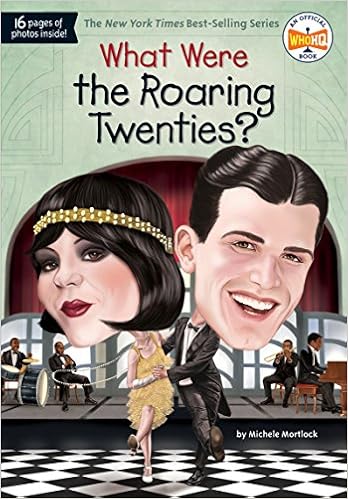
What Were the Roaring Twenties? (What Was?)

Ebook Free What Were the Roaring Twenties? (What Was?)
Satisfied vacation! In this holiday, what will you do to satisfy the downtime? Have you go for some outings as well as vacations? Well, have you had some publications to read to accompany you when having trips? Many individuals believe that there is no need to bring such book while having vacations. However, many likewise always think that reviewing publications come to be a buddy in any kind of situation. So, we will always aim to provide What Were The Roaring Twenties? (What Was?) as one of reading materials to support and accompany you in any scenarios.
Feeling difficult to obtain this best seller book? Why? We presume that best seller publication will certainly always run out promptly. So, it's not to unusual when you will feel tough to obtain it in guide shop, or you need to bespeak What Were The Roaring Twenties? (What Was?) when you need it. Have enough time? Not everybody can wait for log minute to obtain the book. To conquer this problem, we are below to provide you solution. It is not actually difficult for us. We definitely assist you by offering the listings of the brand-new best seller books on the planet.
Regarding this publication, everybody understands that it's truly fascinating book. You may have sought for this book in many shops. Have you got it? When you are run out of this book to acquire, you can get it here. You know, obtaining What Were The Roaring Twenties? (What Was?) in this web site will certainly be a lot easier. No need to choose purchasing in book shops, walking from one shop to others, this is the internet that has lists al book collections worldwide, primarily. The web links are offered for each and every publication.
After setting up the interaction of you in order to choose such book, you could straight discover and get to download and install and make take care of the What Were The Roaring Twenties? (What Was?) The source can be obtained from link to provide right here. As one of the best publication website in the world, we always provide the most effective things. Obviously, the book that we offer constantly the book that provides incredible thing to find out as well as acquire. If you think that you actually require this book currently, get it asap.
About the Author
Michele Mortlock is a lifelong history buff who is thrilled to be sharing her passion for learning about the past with others. This is her first children's book. She lives in Brooklyn, New York, with a fellow history lover and three indifferent cats.
Read more
Excerpt. © Reprinted by permission. All rights reserved.
What Were the Roaring Twenties? Not every period in United States history is special enough to have a nickname. But the 1920s has more than one. These years are called the Roaring Twenties, the Jazz Age, and even the New Era. Why? What made this time so special? What made the twenties roar? It’s because these years were exciting . . . fun . . . dangerous . . . and even silly. There were crazy fads such as flagpole sitting, which started in 1924 when stuntman Alvin “Shipwreck” Kelly took a dare from a friend. He sat on top of a flagpole for thirteen hours and thirteen minutes. Soon Kelly was hired all across the United States to repeat the stunt. Other daredevils imitated him, competing for money. Records were set for twelve days, seventeen days, and even twenty-one days, with food sent up in baskets. Huge crowds gathered to watch. There were also dance marathons, often called “bunion derbies” or “corn and callus carnivals.” For twenty-five cents, spectators watched couples dance for hours, days, or sometimes even weeks. After a while, all that contestants could do was shuffle their feet or cling to the necks of their partners and be dragged along. All to earn the first-place prize money. The twenties also were known for thrilling feats of a more important nature. In 1927, pilot Charles Lindbergh became the first to f ly nonstop across the Atlantic Ocean—and he did it all alone in a small plane that didn’t even have a parachute. Most of all, the 1920s were famous for good times—listening to jazz bands in nightclubs, dancing the Charleston, dashing around in newly affordable automobiles, and following the lives of glamorous Hollywood movie stars. However, the good times didn’t last. On October 29, 1929, it all came crashing down, in an abrupt and terrible end. Chapter 1: After the Great War The 1920s certainly didn’t start out being a whole lot of fun. In the beginning of the decade, the United States was recovering from two terrible disasters. The first was World War I, which ended in 1918 with over seventeen million people dead, both soldiers and civilians. The United States joined the war near the end, but in only nineteen months, more than one hundred thousand US soldiers were killed fighting overseas and another two hundred thousand were wounded. Then a different, totally unexpected enemy appeared: the Spanish flu. This deadly strain of the flu virus spread quickly around the world. It killed 675,000 people in the United States, far more than the war had. The flu killed very quickly, within hours or days. Most of its victims were young, healthy adults. New Yorker Lillian Goldsmith often recalled that her sister Vivian “was dancing at a party on Friday and dead on Monday.” At first, the symptoms seemed like any other flu, with fever and headaches. Sometimes patients recovered. But if they didn’t, their lungs and internal organs were destroyed, and their bodies would turn blue. There was no cure. After so much tragedy, many people—especially the young and the returning soldiers—were desperate to have a good time. They blamed the horrible war on the older generation. Now was the time to leave the past behind. It took a little while for the twenties to really roar. After the war, the US economy went into a slump. Factories that once had been working overtime to provide weapons and supplies for American troops closed. Companies went out of business. People lost their jobs. Returning soldiers looking for work added to the numbers of unemployed. The government, however, found ways to help. And by 1921, the economy turned around. There were more jobs, which put more money in the pockets of the American public. A spending boom began. The New Era had arrived. Chapter 2: Women Voters On August 18, 1920, there was a dramatic change in the lives of American women: They were finally granted the right to vote. It was a right they had spent over seventy years fighting to win. With the vote, women had the power to change laws and to take a greater part in government. This led to a greater desire to take control of their lives. Women stepped out of the shadows of their parents and husbands. They went out by themselves, without any chaperones to supervise them on dates. More girls went to college. In 1918, only 13,491 women earned a college degree. In 1930, the number had climbed to 55,266. Before the war, jobs for women had been limited. The poor had to settle for low-paying jobs, such as doing housework in other people’s homes. For middle-class women, nursing and teaching were among the few careers open to them. Being a doctor, lawyer, or head of a company was practically unheard of. During the war, however, women had taken the jobs of men fighting overseas. They were streetcar operators. They worked in shipyards, steel mills, and factories that made guns and ammunition. Although many of those jobs were lost when the men came back, more and more women kept on collecting paychecks. They found other careers. Growing businesses now needed secretaries, stenographers, typists, and file clerks in their offices. These jobs were usually filled by women. While most women still stayed at home to take care of their families, their lives changed a lot, too, during the 1920s. New inventions made it possible to spend less time doing chores and to have more time for fun. Electricity had been lighting up city streets since the late 1800s. Now more private homes became wired for electricity. Housekeeping became much easier with electric appliances like washing machines, stoves, refrigerators, vacuum cleaners, and sewing machines. In 1924, Clarence Birdseye invented frozen foods. Meals became easier to prepare—they didn’t have to be made from scratch. Convenient products like Wonder Bread, Welch’s Grape Jelly, Kool-Aid, and Rice Krispies came on the market. There was a huge revolution in women’s fashions. Before, women wore stiff, heavy clothing—dresses with high collars, big sleeves, tight corsets, and bulky, floor-length skirts. Now women wanted loose, comfortable clothes so they could do the new fast dances like the bunny hop, the Charleston, and the Lindy. They wanted to play sports. They didn’t want to spend a lot of time getting dressed. Young women began wearing short dresses made of lightweight fabrics that hung loose on their bodies. These new styles were much easier to wear. Mannish styles like tailored suits became popular. Some women even wore pants! A lot of older people were absolutely scandalized! Women changed their hair as well as their clothes. In the past, proper ladies had kept their long hair pinned on top of their heads. Now girls all over the country were inspired by movie stars like Clara Bow. They cut their hair in a short, sleek style called a bob. A bob was easier to care for and felt freer, which was perfect for the new, independent American woman. Opera singer Mary Garden said in an interview, “Bobbed hair belongs to the age of freedom, frankness, and progressiveness.” Since there weren’t a lot of hair salons, young ladies stood in long lines outside of men’s barbershops to get their hair cut. These modern young women became known as flappers. No one knows for sure where the name came from, but everyone in the ’20s knew what it meant. Flappers wore makeup, drove cars, and went to lots of parties. They drank cocktails and smoked cigarettes. Everything they did was considered unladylike. But they didn’t care about breaking old rules—or new ones. They flocked to speakeasies and nightclubs, where they could buy drinks, even though Prohibition had made it against the law, something you could be arrested for.
Read more
Product details
Age Range: 8 - 12 years
Grade Level: 3 - 7
Lexile Measure: 940L (What's this?)
amznJQ.available('jQuery', function() {
amznJQ.available('popover', function() {
jQuery("#lexileWhatsThis_db").amazonPopoverTrigger({
showOnHover: true,
showCloseButton: false,
title: 'What is a Lexile measure?',
width: 480,
literalContent: 'A Lexile® measure represents either an individual's reading ability (a Lexile reader measure) or the complexity of a text (a Lexile text measure). Lexile measures range from below 200L for early readers and text to above 1600L for advanced readers and materials. When used together Lexile measure help a reader find books at an appropriate level of challenge, and determine how well that reader will likely comprehend a text. When a Lexile text measure matches a Lexile reader measure, this is called a "targeted" reading experience. The reader will likely encounter some level of difficulty with the text, but not enough to get frustrated. This is the best way to grow as a reader - with text that's not too hard but not too easy.',
openEventInclude: "CLICK_TRIGGER"
});
});
});
Series: What Was?
Paperback: 112 pages
Publisher: Penguin Workshop (October 16, 2018)
Language: English
ISBN-10: 1524786381
ISBN-13: 978-1524786380
Product Dimensions:
5.3 x 0.3 x 7.6 inches
Shipping Weight: 5 ounces (View shipping rates and policies)
Average Customer Review:
5.0 out of 5 stars
2 customer reviews
Amazon Best Sellers Rank:
#128,643 in Books (See Top 100 in Books)
LOVE THESE BOOKS, I OWN ALMOST EVERY ONE THAT'S BEEN PRINTED AND I ALWAYS PRE-ORDER THEM WHEN I CAN.
My daughter loved the book! She was vet interested in 1920’s flappers. And this book was perfect for her. It was age appropriate for a young teen.
What Were the Roaring Twenties? (What Was?) PDF
What Were the Roaring Twenties? (What Was?) EPub
What Were the Roaring Twenties? (What Was?) Doc
What Were the Roaring Twenties? (What Was?) iBooks
What Were the Roaring Twenties? (What Was?) rtf
What Were the Roaring Twenties? (What Was?) Mobipocket
What Were the Roaring Twenties? (What Was?) Kindle
What Were the Roaring Twenties? (What Was?) PDF
What Were the Roaring Twenties? (What Was?) PDF
What Were the Roaring Twenties? (What Was?) PDF
What Were the Roaring Twenties? (What Was?) PDF

This post was written by: Author Name
Your description comes here!

Posting Komentar